Prepare
State of emergency in effect
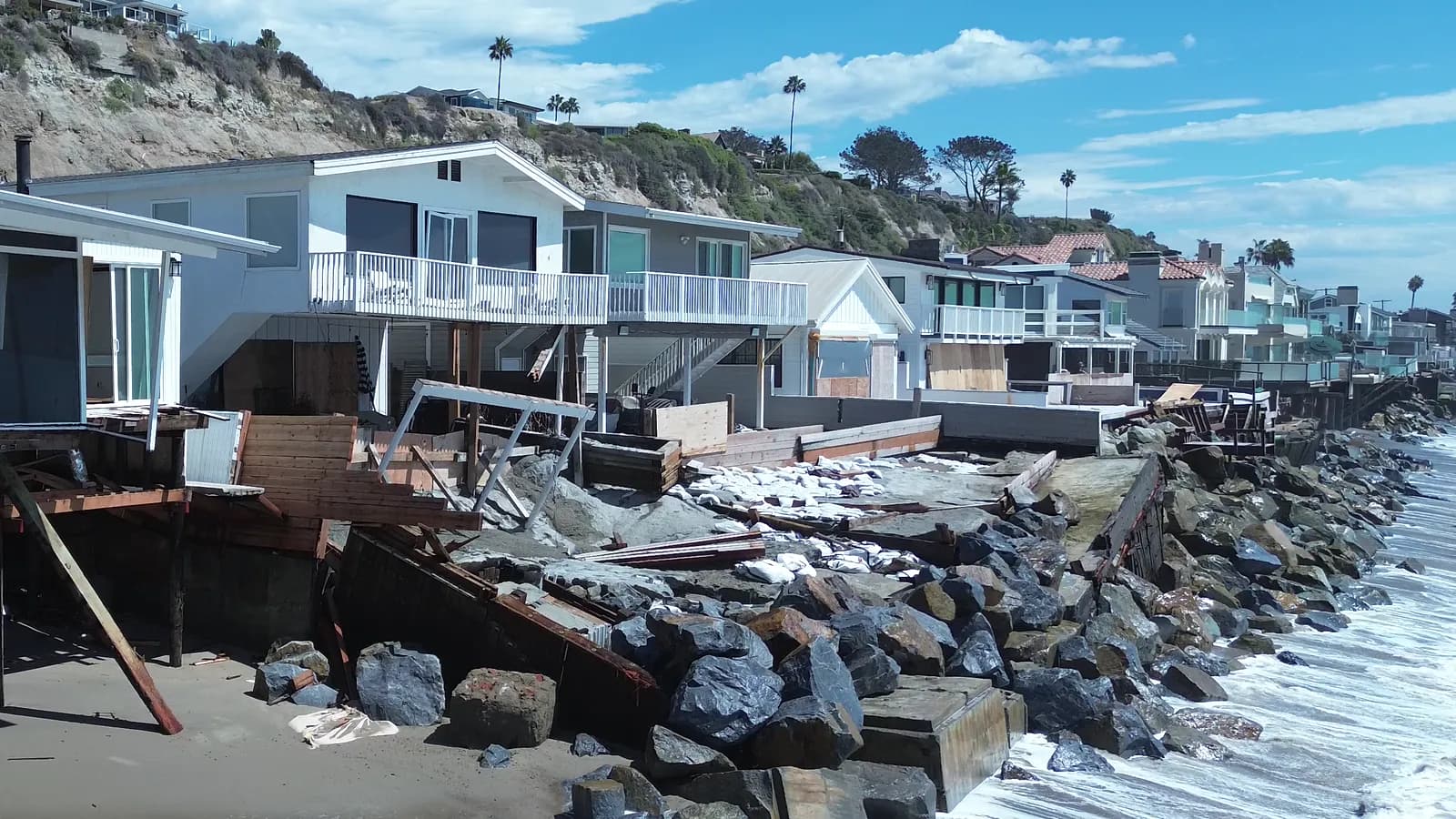
- On September 17, 2026, Orange County Board of Supervisors Chair Doug Chaffee proclaimed a local state of emergency (opens in new tab) over coastal erosion and storm damage from Hurricane Marie, citing concern about further El Niño storms this winter.
- On September 23, 2026, LA County Supervisor Hilda Solis issued a county emergency proclamation (opens in new tab) urging residents to sign up for alerts, plan evacuation routes, clear gutters, and check roofs.
- On September 30, 2026, San Diego County proclaimed a local emergency (opens in new tab) to speed up its response to flooding, landslides, and debris flows, pointing residents to sign up for alerts, find sandbag sites, and check the county's Know Your Hazards Map.
As of September 30, 2026. Proclamations can be extended or lifted. Check Cal OES's open state of emergency proclamations (opens in new tab) page for the statewide proclamation's current status; county-level proclamations aren't reliably listed there, so check each county's own alert site (linked below in this page's county alerts section) for updates on those.
Sign up for emergency notifications
Alerts come from your county, not from us. Five Southern California systems cover the coastal core. It takes about two minutes each.
Ready LA County Emergency Notifications
Sign up for LA County emergency alerts and notifications.
Coverage: Los Angeles County
NotifyLA
The City of Los Angeles's official emergency notification system.
Coverage: Los Angeles City
ReadyOC / AlertOC Text Alerts
Text-based emergency alerts for Orange County residents.
Coverage: Orange County
AlertSanDiego
San Diego County's official emergency alert and notification system.
Coverage: San Diego County
VC Alert
Ventura County's official emergency notification system.
Coverage: Ventura County
If a hazard tool flagged your address
What the responsible agencies say about flood, landslide, and liquefaction risk, and where to read their guidance directly. Check your address with the official tools on the Hazard Lookup page.
Flood
FEMA's Homeowner's Guide to Retrofitting (FEMA P-312) is written for homeowners who want to know how to protect their homes from flooding, and FEMA describes it as designed for readers with little or no experience with flood protection methods or building construction.
- FEMAHomeowner's Guide to Retrofitting (FEMA P-312, 2025) (opens in new tab)
FEMA's guide to the flood-protection options available to homeowners, and how to decide between them.
Landslide & Debris Flow
USGS lists warning signs that ground may be moving, including sticking windows or doors, new cracks in walls, ceilings, or foundations, and leaning utility poles, deformed fences, or tilting trees on a hillside. For existing homes, USGS's preparedness guidance points to hiring a professional geologist or engineer with landslide experience for an evaluation.
- USGSWhat are the signs of landslide development? (opens in new tab)
USGS's full list of landslide warning signs, and what it recommends if a landslide occurs.
- USGSLandslide Preparedness (opens in new tab)
USGS's preparedness guidance for homeowners, including when to consult a geologist or engineer.
Liquefaction
USGS describes liquefaction as saturated sand and silt taking on the characteristics of a liquid during the intense shaking of an earthquake. It's triggered by ground shaking, not rain — the earthquake-triggered liquefaction that California maps. Those zones are mapped statewide by the California Geological Survey.
- California Geological SurveyEQ Zapp: California Earthquake Hazards Zone Application (opens in new tab)
CGS's official map of liquefaction, earthquake-induced landslide, and fault rupture zones, searchable by address.
- USGSLiquefaction Susceptibility (opens in new tab)
USGS's plain-language explainer on what liquefaction is and where it occurs.
- California Residential Mitigation ProgramEarthquake Brace + Bolt (opens in new tab)
Grants of up to $3,000 (more for income-eligible households) to bolt pre-1980, raised-foundation, wood-framed houses to their foundations and brace crawl-space walls. The program addresses how a house handles earthquake shaking; it does not address liquefaction or ground settlement itself. Registration opens for limited windows each year.
What insurance doesn't cover
Storm-Proof Your Home and Property
A few hours of yard and roof work, per AlertSanDiego / San Diego County guidance, can prevent most water damage before a storm arrives.
Sandbags
Sandbag distribution has historically been announced ad hoc via press release rather than a permanent page. Verify these links still resolve closer to storm season.
Los Angeles County
San Diego County
Orange County
Ventura County
Santa Barbara County
Emergency Kit Checklist
LA County: plan for up to 10 days
Core kit (Ready.gov / FEMA guidance)
Additional items (Ready.gov / FEMA guidance)
Additional storm-specific items
Practical additions; not part of the official Ready.gov list. Add your own below.
Go Bags for Evacuation
Your kit above is for sheltering in place at home. A go bag is a smaller, portable version, packed and ready by the door, for when you need to leave fast. Keep one per person.
Pet Disaster Supplies
- Ready LA County: Pet Disaster Supply Kits (opens in new tab)
- American Red Cross: Pet Disaster Preparedness & Recovery (opens in new tab)
- CDC: Pet Disaster Kit Checklist (opens in new tab)
- ASPCA: Disaster Preparedness for Pets: What to Plan and Pack (opens in new tab)
- ASPCA: Animal Poison Control (opens in new tab)
Family Emergency Plan
Fill this out together so everyone knows the plan if you get separated during a storm.
Household members
Meeting place
Emergency contacts
Emergency Evacuation 101
If local officials issue an evacuation order, don't wait to leave. Here's what to know before it happens.
Where to go
Stay with family or friends outside the hazard area if you can, or check your county's emergency management site for open shelters. Avoid driving into flooded or closed roads to get there.
What to bring
Your go bag, medications, phone and charger, and any pets. Bring copies of important documents rather than originals when possible.
What to expect
Evacuation routes can be slow and congested, and some roads may already be closed. Checkpoints may restrict re-entry until officials declare the area safe again.
Safety During Storms
General storm-safety guidance from AlertSanDiego / San Diego County, applicable across Southern California.
- Never drive or walk through flooded streets. Remember: Turn Around, Don't Drown.
- Check advisories and warnings regularly
- Be ready to evacuate if needed
- Keep flashlights, batteries, and radios accessible in case of outages
- Secure trash bins and outdoor debris to keep drainage paths clear
- Use caution when traveling; watch for signal outages, downed lines, and debris
Downed power lines
- SCE: 1-800-611-1911 (non-emergency report)
- SDG&E: 1-800-411-7343 (1-800-411-SDGE)
- LADWP: 911 for the downed line itself; 1-800-342-5397 (800-DIAL-DWP) for general outages
After the Storm
Cleanup and health guidance from AlertSanDiego / San Diego County for once the water recedes.
- Avoid standing water to prevent mold, bacteria, and pests
- Dry wet areas in your home quickly and safely
- Discard food exposed to floodwater or affected by power outages
- Practice good hand hygiene, especially during cleanup
- Keep children and pets away from contaminated water
- Photograph and document damage before cleanup — for insurance claims and any FEMA aid application